Doble Kara

By Bethel Iglesia HUMSS 11 E

Resulta ng larawan para sa double faced
“Doble Kara or Double Faced “

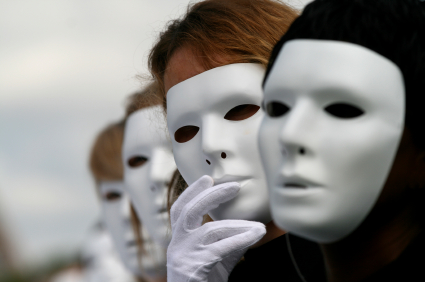
Everyone wears a different mask in front of different people. The problem is some people, actually a lot of people has acted “double faced”. Doble Kara or double faced people appear to thrive upon the social status and attention they claim from being the senior golden gossip dispenser. They prioritize that over consideration for betraying the confidentiality of their acquaintances. In this modern life everyone wears mask to protect their inner feelings, insecurities, and personality. Everyone has two faces that they wear throughout their life. One for the world they live in where they act a certain way to be socially accepted by their peers, and one for when they’re alone and all the pressures of life are lifted. Life has a way of making people feel self-conscious about themselves, so they hide. The fear of people finding out and completely ruining their reputation that they’ve spent years building is hard to bear. So instead of revealing  their self, they hide their secrets away where they won’t ever become known, so life can go on as is should be.
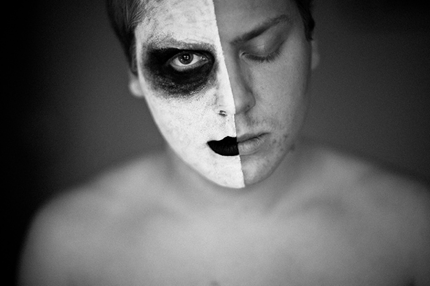

“A person’s personal life is like a deep ocean, full of secrets that a person would never want to see daylight.”

According to Charles Horton Cooley’s the looking glass self theory, individuals base their sense of self on how they believe others view them. Using social interaction as a type of “mirror,” people use the judgments they receive from others to measure their own worth, values, and behavior. According to Self, Symbols, & Society, Cooley’s theory is notable because it suggests that self-concept is built not in solitude, but rather within social settings. In this way, society and individuals are not separate, but rather two complementary aspects of the same phenomenon.

We can’t know how others judge us or how they feel about us. Instead, we depend on our imagination either thinking about how they might react when we’re looking in the mirror, or observing their responses and attempting to infer from those to their inner ruminations. What this means is that our self-image is shaped by others, but only through the mediation of our own mind.

Just looking at life and all its aspects shows how people are frightened to truly express themselves as the individual they really are. Life becomes complicated in the process of growing up, and looking around, society doesn’t encourage people to stand up and be what they honestly want to be. In imagining how others will respond to our actions and presentation, we allow ourselves to manage the kind of self-image we attempt to project, but crucially, as Cooley highlights, there is no way to truly know what others think of us.

The looking glass self helps to explain early identity development. A person tends to become a combination of the features that are approved and desired in society. Society always puts pressure on individuals to conform to its values and judgments in order to receive approval, thus humans who generally seek acceptance and want to be well thought of shape their social actions according to the signals they get from the social mirror into which they are always looking.
Kaugnay na larawan

The Pabuhat Phenomenon

When Group Works Just Won’t Work

The word pabuhat is a shortened Filipino word derived from the word nagpapabuhat which means being lifted or being carried. In our day and age, especially in the context of education, the word pabuhat is used as an adjective; it describes a person who is very much dependent on a person or group for any personal academic requirements. A pabuhat person could be someone who considers you as their “friend” only for you to do their requirements as a “small favor” for some reasons/excuses. In a group, a pabuhat person could be someone who is often missing in action, most especially when the project is on progress and is only present when it is already due.

A pabuhat person could be someone who considers you as their “friend”. In a group, a pabuhat person could be someone who is often missing in action.

Back in the first semester, I didn’t know anyone that much and so I didn’t trust anyone. This is also the reason why I couldn’t help but cringe and feel all discouraged whenever our teacher would say that a project is to be done by groups. This was my common experience for the first semester. However, this wasn’t my usual reaction way before. For someone who came from what others consider as “cream of the crop” for most of her life, I haven’t had that much of a negative experience with group works as people I’ve shared tasks with/worked with were wired like me.

Of course, the inevitable happened – I came to experience first-hand on how it is to have the dreaded pabuhat group mate. Ultimately, I experienced what could possibly be the worst-case scenario in my mind – making the task of that group mate instead. How could I forget that night? Thinking through it now, I am aware that my experience isn’t totally a new one. It is also the experience of several students like me who feel burdened by group works.

I came to experience first-hand on how it is to have the dreaded pabuhat group mate.

The Pabuhat Phenomenon then could be considered as a form of a deviance. According to Amper, et. al.  (2016), from a sociological perspective, deviance refers to behavior that violates norms and values considered by society as important. In a classroom environment, the Pabuhat Phenomenon certainly demonstrates the violation of the expected norm in group tasks, which is to cooperate and to be a responsible group mate in general.

Robert King Merton was an American sociologist. He spent most of his career teaching at Columbia University, where he attained the rank of University Professor.

According to Robert Merton’s Strain theory, the tendency of an individual to commit such an act of deviance is because of his/her limited opportunity and even because of surrounding cultural pressures. In this context, passing the subject is a top cultural pressure. Because of this, an individual then is compelled to respond to this cultural pressure by being a pabuhat, doing whatever it takes to pass the subject. This form of response, according to Merton is also known as innovation. It is when an individual uses socially unapproved or unconventional means to obtain culturally approved goals.

The tendency of an individual to commit such an act of deviance is because of his/her limited opportunity and even because of surrounding cultural pressures.

They may get away with it and other people might despise them for it, but it still won’t matter to a pabuhat person with selfish goals. I just hope I don’t encounter one anytime soon.

References:

Thompson, K. (2016, April 16). Merton’s strain theory of deviance. Retrieved from https://revisesociology.com/2016/04/16/mertons-strain-theory-deviance.

Amper, Z. S. et. al. (2016). Knowing our social world: A comprehensive worktext in understanding society, culture and politics for senior high school. Cebu: University of San Carlos Press.

The Filipino Tambay phenomenon

istambay

Every country in the world has its own range of social phenomena which makes its culture unique; in the Philippines, it’s the same as well. As reported by the Philippine National Police,  approximately 78,359 “Tambay” were arrested in the month of July 2018 in Metro Manila alone. Thousands of Filipino Youth dwell outside their homes at night seeking for either dangerous fun or simple chitchats and drinking with friends and peers. Labelled by the Philippine Statistics Authority, these individuals are popularly known as out-of-school juveniles or in Tagalog: “Mga Tambay”.

Tambay is a vernacularized word for “standby”, which over the years developed a set of odd characteristics. It is a term used to describe individuals who are always seen along the streets with peers doing nothing but vices, gambles and chitchats. “Mga sitting pretty” may be one of the alternative general descriptions for their daily routine.

To understand more about the phenomenology of “Tambay” and how they become as such, we must look into the general situation of these young individuals from how they were raised and how they were treated by society. By using the Labeling theory as basis for analyses, this will suspends one’s judgement, which points to individualized and generally negative stereotypes that Filipinos are experiencing this state of inactivity.

There is a huge possibility that the behaviors of these individuals were affected and influenced by how society describes them in a stereotype manner. When a person is academically challenged, the person might experience a harsh road up ahead. This situation could become a source for the self to embrace his/her weakness and become a street-person at the end. When students with Academic Challenge fail, as observed, parents now only laugh about it and just train their son/daughter to accept what they got and do the same thing — just laugh about it. As members in society begin to treat these individuals on the basis of their labels, the individual begins to accept this label him- or herself. In other words, an individual engages in a behavior that is viewed by others as inappropriate, others label that person to be deviant, and eventually the individual internalizes and accepts this label.

The Racism Phenomenon

“Racism is taught in our society, it is not automatic. It is learned behaviour toward persons with dissimilar physical characteristics.” – Alex Haley

Racism is something where one human or race thinks that they are more superior than the other based on their biological characteristics or features. It can be traced even way back during the 18th century where western Europeans have enslaved Africans to build their empire. By the 19th century, racism matured and has spread throughout the world causing wars and conflict like where the Holocaust and slavery took place (n.d). During these events, the actions being done to the victim race being taught already proves the act of racism.

blm

The theory that will be used here is the conflict theory. The Conflict theory may be used to look at events that involve a lot of immorality, violence, wars, injustice, and other forms of discrimination by explaining that there is a natural disparity in a society that causes these problems. According to Karl Marx’s conflict theory (2019), that by maintaining dominance, power and authority we can have social order. For example, those with great wealth will take advantage or abuse those who are different and “lower” than them. Society always preys on the weak to maximize their own benefits. ON-BEING-FILIPINO_COVER_DEC2018

Our country, the Philippines, has no specific law whatsoever in handling this kind of phenomena. We say that one is in the act of being a racist, an individual can do what he or she wants to the person given that what they will do will not violate any laws. Social inequalities also takes part in racism. Filipinos are racists to their own kind. Comparing with each other depending on their social status and mocking those that are below them.

There are many forms or racism like the individual racism and the systematic racism. Individual racism refers to a person’s racist assumptions or behaviours that one is always bigger or better than the other person. The systematic racism includes the policies and practices which is firmly established in credible institutions, which results in the exclusion or promotion of a specific group. Out of these two, individual racism is the problem. The personal point of view of these “higher” classed Filipinos will only change when the opposing class will strive and reach their social level.

unity_432x3281

Racism has been present throughout the human history in order for “high classed” people to stay in power. People will always find a way to justify their views even if it is wrong. This causes rifts in society. In conclusion, racism is a disservice to society because it divides rather than unites.

References:

Chappelow, J. (2019, April). Conflict theory. Retrieved from https://www.investopedia.com/terms/c/conflict-theory.asp

Racism. (n.d.). Retrieved May 2, 2019, from https://en.unesco.org/courier/october-1960

Call me a name

How name calling affects the individual.

Words can change an individual. What people say about a person can change their behaviour and their identity. Words can change a person’s thoughts about themselves all because of society tells them they are. And what society says we are, most of us believe it.

When we do something wrong, society’s way to control us is usually with gossip. When we continue to do something wrong, they take it as a sign of rebellion from the norms that we have. So they talk about our action and this usually leads us to identify with it. Name calling is nothing new to society, it is our way of control and to make people conform. Here are some examples in society:

1. When a student would often get into fight in school, people would label him/her as a troublemaker. Soon enough that sticks with them and they accept it; so they continue this deviant behaviour because that’s how society labeled them, a troublemaker.
2. A person who committed a crime would often be looked at by society as criminals for the rest of their lives. This becomes their stigma.

Howard Becker’s Labelling theory states that people come to identify and behave in ways that reflect how others label them. This theory posits that how people react to an action can result in deviance or conformity.

How society views us can affect our identity, according to Charles Cooley self is a social product. Interactions shape personality or self-concept from the time of birth to the time they become older. In short, we are shaped by society’s views of us. His three elements to the Looking-glass self theory all say that how we think we appear to others, how they judge us, and our feelings to their judgement all shape our development. Sometimes the label given would become what their known for- their master status. A master status carries the most weight in our interactions with others, so if our master status is something negative like say a criminal, this would greatly affect judgements around the person. According to developmental psychology, Language is one of the many ways through which culture affects development. We know from research on adults that languages forge how people think and reason. Moreover, the content and focus of what people talk about in their conversations also vary across cultures. 

Every society has norms that people ought to follow, not following can lead to being stigmatised. We look for approval from others because that is rewarding, society puts us in a better light. So we follow cultural norms in order to be approved, it influences how we act around others.
Words can change an individual. Sometimes how society views us is enough to change our personality. We often forget the impact of our words and we forget that there are consequences to every action. Labeling negatively affects people from the inside and soon manifests outside, let us never forget that.


.

The Carolinian Experience

Article by: Crystal Dela Torre and Kyra Lim

The university brings together people from all over the country, not just from the city. HUMSS 11 E is no exception; our block consists of a variety of people. With different personalities, you’d expect differences; yes there are but not so much that it would affect the whole class. Regardless of the existing diversities, it has proved to be not a hindrance in uniting the class. A manifestation of such is the University of San Carlos Apotheosis. It was not easy managing a whole class of different personalities that have just met. It takes sweat, tears and determination to make different pieces of the puzzle work together to form a beautiful picture. That day was nerve wrecking for the whole class because we knew that we lacked the time and practice, but we had faith. In the end, the whole ordeal ended successfully whilst HUMSS 11 E emerged as champions of the event.

University of San Carlos- 2019 Apotheosis Champions- Humanities and Social Sciences 11 E

We are a diverse university. We meet different people from all over the country. It is an exciting experience because we are different yet somehow the same. The people we meet become our new pack maybe a new family. As the school year ends, we not only leave wiser and stronger, we leave with new friends. 10 months of school, everyone has found a new set of friends. These people we eat lunch with, we work on assignments with, we team up for projects with, and they are the people we consider our people. Through the ups and downs of the year, bonds form over the stress and laughter we share. Every person we meet will be another piece in the puzzle of our lives, something needed to complete a whole. High school is always said to be the best part of life in school and I am sure that friends are 99% of the reason for it.

HUMSS 11 E